NR/SOURCES

Sources and method

How the archive is made, what it relies on, where the sources disagree, and what remains unknown.

How the archive is made

Every statement of fact in this archive comes from a source, and the margin beside it names the source, with the page where there is one. The only statements that do not rest on a published source are the compiler’s own, about the family’s name in France and about its privacy; the margin credits them to “Family information (the compiler)”.

Sources are neither equal nor independent. Marcov (2011) and Markov and Glăvan (2021) share an author and rest on the same older works: Lendvai (1905), Borovszky (1913), Milankov (2001) and the Temeswarer Zeitung of March 1903. English Wikipedia’s article on Fedor is a digest of Marcov. The archive counts derivatives that agree as one source, and a work that it has not seen itself is cited “via” the one that carried it to the archive.

Three marks in the margins say how firm a statement is.

Sources differ
Two or more sources give different readings. The page shows the reading the archive works with, and the register row that sets them side by side.
Reported only
The statement rests on a single press, tourism or compilation source, or has not been verified.
Open question
The sources do not settle the point. The question is listed on the Sources page and is answered nowhere else.
Documents held, not published
The compiler holds civil records that bear on the statement. They are not published, because they name living people.

When the archive has to work something out that no source states, it says so. A figure that it calculated itself — hectares from jutros, the distance between two places — is marked “calculated by the archive” or “conversion by the archive”, and a reading that it suspects but cannot prove is called the archive’s conjecture.

The record is limited on purpose. The story told here runs from the grant of arms in 1694 to 1919, and only people who are deceased and were born before 1900 are described.

The English text is the base. The French and Serbian texts are translations of it; the Serbian is written in Cyrillic, and the Latin version is made from the Cyrillic letter for letter. The translations have not yet been read by a native-speaking proofreader.

Sources

Every source cited anywhere on the site. Each entry says what kind of source it is and how the archive reached it, and the short name in a margin links here. Where the archive read only a modern work that quotes an older one, the older work is listed as an original source “not seen directly”, with the work that carried it.

Markov & Glăvan 2021

ScholarshipRead for this archive

Markov, Zoran, and Ciprian Glăvan (Марков, Зоран; Главан, Ћипријан). 2021. “Племићи Николић од Рудне. Породична историја у једном документу из збирке Народног музеја Баната у Темишвару” (“The Nikolić of Rudna nobles: a family history in a document from the collection of the National Museum of Banat in Timișoara”). Ishodišta (Исходишта) 1 (7): 145–162. Niš: Faculty of Philosophy, University of Niš. doi:10.46630/ish.7.2021.11.

Prints the Serbian translation of the family manuscript (pp. 148–154), the authors’ commentary on the arms and on Fedor (pp. 155–157), six appendices (pp. 159–161) and Lendvai’s pedigree (p. 162). The authors work at the National Museum of Banat. This archive does not republish the paper; follow the link.

doi.org

Marcov 2011

ScholarshipRead for this archive

Marcov, Zoran. 2011. “Baronul Fedor Nikolics de Rudna (1836–1903)”. In Florin Zamfir (ed.), Oameni, evenimente, tradiții din Banatul de câmpie, 5th ed., 7–15. Timișoara: Artpress. ISBN 978-973-108-380-3.

A biography of Fedor written in Romanian by the same author as Markov & Glăvan 2021, built on the Temeswarer Zeitung, Milankov, Lendvai and Borovszky. It is the main basis of the English Wikipedia article on Fedor.

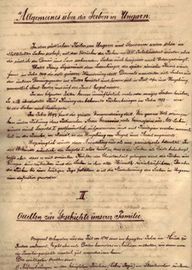
Family manuscript (GuF)

Family chronicleOriginal source, not seen directly

Geschichte unserer Familie (“History of our family”). German manuscript of six leaves, 36.1 × 22.4 cm, undated and unsigned, written after 1903 for Jovan Thierfelder. National Museum of Banat, Timișoara, History Department, inv. 21.735 (manuscript) and 21.734 (typescript on “Remington Papier”); registered 30 June 1988.

The family’s own chronicle, probably by Aleksandar (Šandor) II Nikolić (a working hypothesis of Markov & Glăvan 2021). Its author says the family’s papers from before 1848 burned and that he worked from the Libri Regii in Budapest, the Pest County nobility register and the Timiș County archive. The three genealogical tables that went with it are lost. Read here in its Serbian translation in Markov & Glăvan 2021; cited as Markov & Glăvan 2021 with the printed page.

Reached through Markov & Glăvan 2021

Lendvai 1905

ScholarshipOriginal source, not seen directly

Lendvai, Miklós. 1905. Temes vármegye nemes családjai, vol. III, pp. 139–142 (pedigree p. 141; arms and motto p. 142). Budapest–Temesvár.

Not seen directly; cited via Markov & Glăvan 2021 and Marcov 2011. Its pedigree is redrawn in Markov & Glăvan 2021, p. 162, and differs from the family manuscript in some years and dates.

Reached through Markov & Glăvan 2021, Marcov 2011

Milankov 2001

ScholarshipOriginal source, not seen directly

Milankov, Vladimir (Миланков, Владимир). 2001. “Барон Федор Николић од Рудне”. Temišvarski zbornik (Темишварски зборник) 3: 95–112. Novi Sad: Matica srpska.

Not seen directly; cited via Marcov 2011 and Markov & Glăvan 2021 for Fedor’s years in Belgrade, Sarajevo and Sremski Karlovci, his land and banking, the Hungarian barony of 1886 and his funeral.

Reached through Marcov 2011, Markov & Glăvan 2021

Marcov & Glăvan 2010

ScholarshipRead for this archive

Marcov, Zoran, and Ciprian Glăvan. 2010. “Istoria familiei Nikolics redată într-un document din colecția Muzeului Banatului”. Analele Banatului, S.N., Arheologie-Istorie 18: 173–183. Cluj-Napoca: Mega.

Not seen. The Romanian forerunner of Markov & Glăvan 2021.

euweb.cz genealogy

CompilationRead for this archive

“Nikolics de Rudna”. Genealogy of Hungarian nobility, genealogy.euweb.cz/hung/nikolic.html (page last updated 18 April 2006).

Gives exact dates and places for the descendants of Jovan (VII), but contains at least one impossible date (register C7).

genealogy.euweb.cz

Wikipedia (en), Fedor Nikolić

CompilationRead for this archive

“Fedor Nikolić”. English Wikipedia, read 24 and 25 October 2026.

A digest of Marcov 2011 with a few additions from other sources. Where it agrees with Marcov 2011 that counts as one source. Inconsistent with itself in places.

en.wikipedia.org

Wikipedia (sr), Николићи

CompilationRead for this archive

“Николићи (породица)”. Serbian Wikipedia, read 24 and 25 October 2026. It cites Acović, Heraldika i Srbi (2008) p. 434; Stajić, Novosadske porodice (1936) pp. 259–264; Svetovid (Vienna), 24 April 1854.

Some of its dates follow the Julian calendar.

sr.wikipedia.org

Noblesse & Royautés

Press articleRead for this archive

“Le palais de la princesse Ljubica à Belgrade”. Noblesse & Royautés.

A short popular article listing the seven children of Miloš and Ljubica. Its reader comments are not used as evidence except where marked.

noblesseetroyautes.com

Wikipedia (en), Residence of Princess Ljubica

CompilationRead for this archive

“Residence of Princess Ljubica”. English Wikipedia, read 24 October 2026.

en.wikipedia.org

Wikipedia (en), Miloš Obrenović

CompilationRead for this archive

“Miloš Obrenović”. English Wikipedia, read 24 October 2026.

en.wikipedia.org

Wikipedia (en), Mihailo Obrenović

CompilationRead for this archive

“Mihailo Obrenović, Prince of Serbia”. English Wikipedia, read 24 October 2026.

en.wikipedia.org

Wikipedia (en), Ljubica Vukomanović

CompilationRead for this archive

“Ljubica Vukomanović”. English Wikipedia, read 24 October 2026.

en.wikipedia.org

Wikipedia (en), Júlia Hunyady de Kéthely

CompilationRead for this archive

“Júlia Hunyady de Kéthely”. English Wikipedia, via a search summary, 24 October 2026.

Used only for her second marriage, to Duke Karl of Arenberg, in 1876.

en.wikipedia.org

Wikipedia (en), Teodor Janković-Mirijevski

CompilationRead for this archive

“Teodor Janković-Mirijevski”. English Wikipedia, via a search summary, 24 October 2026.

Used only for the open question about Todor Janković of Mirijevo: the school reformer (1741–1814) went to Russia in 1782.

en.wikipedia.org

stiripentrucopii.com 2023

Press articleRead for this archive

“Istoria familiei Nikolics”. stiripentrucopii.com, 7 May 2023.

A popular introduction to the manuscript; gives 26 March 1694.

stiripentrucopii.com

Ghidul Banatului 2020

Press articleRead for this archive

“Povestea conacului nobiliar de la Rudna. Doi germani l-au cumpărat ca să-l reabiliteze”. ghidulbanatului.ro, 30 January 2020.

Local press on the Rudna manor, its purchase in 1782 and the adoption of 1804. Journalistic.

ghidulbanatului.ro

Adevărul 2013

Press articleRead for this archive

Both, Ștefan. “Au lăsat Germania pentru a se muta într-un castel aflat în paragină, la Rudna”. Adevărul (Timișoara), 20 August 2013 (updated 11 August 2022).

Local press with owner interviews; used for the manor after 1945 and for the sale of the shares in 1873 and 1875.

adevarul.ro

Tion 2021

Press articleRead for this archive

“Banat Brunch, în curtea Castelului Nikolici. Călătorie prin istoria și gusturile din Rudna”. Tion.ro, 31 July 2021.

A tourism and events article; the only source for the 1919 sale and the lawyer owner until 1946.

tion.ro

Tribuna 2026

Press articleRead for this archive

“Satul de lângă Timișoara cu 700 de ani de istorie: conacul nobililor Nikolici și poveștile ascunse ale Banatului”. Tribuna, 26 September 2026.

Local press; the source for the village’s history, the church of 1834–38 and the dating of the manor to about 1780, and for the year 1781 for the purchase.

tribunasnm.ro

Wikipedia (fr), Noblesse autrichienne

CompilationRead for this archive

“Noblesse autrichienne”. French Wikipedia, section on the abolition of nobility in 1919, read 25 October 2026.

Says that the Austrian law of 1919 (the Adelsaufhebungsgesetz) abolished nobility, its privileges, titles and noble names for Austrian citizens. It gives the year only, not the day or the number of the law.

fr.wikipedia.org

Spotlight Timișoara

Guide or referenceRead for this archive

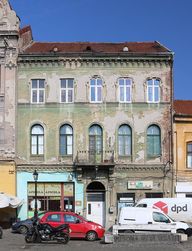
“Piața Traian”. Spotlight Timișoara, spotlight-timisoara.eu.

A guide to Timișoara; names the building once owned by Baron Mihai Nikolics of Rudna.

spotlight-timisoara.eu

Wikimedia Commons

Guide or referenceRead for this archive

Wikimedia Commons, file description pages (commons.wikimedia.org); each image is credited on the Sources page.

commons.wikimedia.org

Family information (the compiler)

Family informationFirst-hand information from the compiler

Information supplied by the compiler of this archive, Vincent Nikolic de Rudna, about the family’s name in France and about the family’s privacy.

Register of discrepancies

When sources give different readings, the page shows the reading the archive works with and flags it; this register sets all the readings side by side. Rows C1 to C20 are open or carry a working reading. Rows S1 to S4 were settled by a better source and are kept for the record.

C1

Day of the 1854 Austrian barony

Unresolved
What the sources say
The archive’s reading

The archive states 1854 and shows both days. The idea that April marks an imperial decision and November the diploma is the archive’s conjecture, not a finding.

C2

Year of Fedor’s marriage to Wilhelmina Hirsch

Reading adopted, others shown
What the sources say
The archive’s reading

The 1879 reading has a single origin, the obituary. The identical day and month suggest one event, and the children, born from 10 May 1870, favour 1869. The archive shows 1869, flagged.

C3

Year Rudna was bought

Reading adopted, others shown
What the sources say
The archive’s reading

1782, which the family manuscript and two other sources give.

C4

Death of Jovan Nikolić (formerly Belčić)

Unresolved
What the sources say
The archive’s reading

Shown as “1828 (1830 in Lendvai)”.

C5

Death of Aleksandar (Šandor) I

Unresolved
What the sources say
The archive’s reading

Both are shown.

C6

Year of Savka Obrenović’s birth

Reading adopted, others shown
What the sources say
The archive’s reading

1814; the others are noted.

C7

Date of Elisabeth’s first marriage (to Count Eugen Hardegg)

Reading adopted, others shown
What the sources say
The archive’s reading

As written, 1889 is impossible: she was born in 1877 and the groom in 1873. The year is probably 1899. The archive states “date uncertain”.

C8

When Fedor became a Hungarian baron

Unresolved
What the sources say
The archive’s reading

Unresolved. A family-level grant in 1875 and Fedor’s own in 1886 would reconcile them, but that is conjecture. Both are shown.

C9

Start of Fedor’s Kikinda mandate

Unresolved
What the sources say
The archive’s reading

Shown as “1886–1896”, as Marcov gives it, with the variants noted.

C10

End of the Royal Commissionership

Reading adopted, others shown
What the sources say
The archive’s reading

1901, with 1902 noted.

C11

What 15 July 1882 marks

Reading adopted, others shown
What the sources say
  • The official appointment as Civil Adlatus — Markov and Glăvan (2021).

  • His naming as Privy Councillor “for services so important”, although he arrived only on 1 August — Marcov (2011).

  • Privy Councillor on 15 July, Adlatus effective 1 August — English Wikipedia.

The archive’s reading

Appointment and rank were both settled by 15 July; he took office on 1 August. A difference of wording.

C12

Fedor’s missions in 1880

Unresolved
What the sources say
  • “Baltic countries” — the 1903 obituary, as relayed by Marcov (2011) and by Markov and Glăvan (2021).

  • A diplomatic mission in Romania earned a Matica srpska honour — Milankov (2001), via Marcov (2011).

The archive’s reading

Both are reported; the archive flags “Baltic” as doubtful (conjecture: a slip for “Balkan”).

C13

Day of Micheline’s death

Unresolved
What the sources say
The archive’s reading

Shown as “1 or 2 July”.

C14

Day of Miloš Nikolić’s death

Reading adopted, others shown
What the sources say
The archive’s reading

The two days are twelve days apart, as the Julian and Gregorian calendars were in the nineteenth century. The archive shows 25 January 1863 (new style).

C15

Day of Savka’s death

Reading adopted, others shown
What the sources say
The archive’s reading

The same day in the Julian and Gregorian calendars. The archive shows 5 October 1848 (new style).

C16

Princess Ljubica’s birth and place of death

Reading adopted, others shown
What the sources say
The archive’s reading

1788; “died in 1843, buried at Krušedol”; the archive does not state the place of death.

C19

Date of the Rudna manor

Unresolved
What the sources say
The archive’s reading

“About 1780 according to heritage sources”; no builder is named.

C20

Where the family chapel or tomb is

Reading adopted, others shown
What the sources say
  • “The family chapel on the Rudna estate” (funeral report) and “the family crypt on the estate”.

  • Today’s family tomb lies “several kilometres from the manor” and is neglected.

  • A family chapel is part of visitor tours.

The archive’s reading

The 1903 reports agree. The estate was large (about 3,300 ha), so “on the estate” and “several kilometres from the manor” can both be true.

S1

Date of Prince Mihailo’s assassination

Settled
What the sources say
The archive’s reading

Settled: 10 June 1868. The 2021 paper’s “May” is a slip.

S2

Year of Fedor’s first Diet seat

Settled
What the sources say
The archive’s reading

Settled: 1861. The author’s own earlier article gives 1861, and the Diet met in 1861.

S3

Date of Fedor’s funeral

Settled
What the sources say
The archive’s reading

Settled: 4 March; the coffin was carried to the church on the morning of 3 March. The citation date of the report is odd for a funeral of 4 March and is probably an issue date.

S4

The Sarajevo “Nicolics house”

Settled
What the sources say
The archive’s reading

Settled as documented. Which building it was remains an open question (Q2).

Open questions

Questions that the sources consulted do not answer. They are listed here and answered nowhere else on the site; a page that touches one carries an “open question” mark that links to it.

Q1 Who was Todor Janković of Mirijevo? The family manuscript calls him Jovan Nikolić’s father-in-law and co-buyer of Rudna in 1782. A 2026 local article describes “Teodor Iancovici de Mirievschi” as a senior imperial official who helped organise schooling in the Banat. That fits the school reformer Teodor Janković Mirijevski (1741–1814), who went to Russia in 1782 — but no source consulted says they are the same man.

Q2 Which building was the “Nicolics house” in Sarajevo? Milankov (2001), through Marcov (2011), describes the former Austro-Hungarian consulate, a Turkish-style building, adapted for Fedor and used as the meeting place of Sarajevo’s high society. No source consulted says where it stood or what became of it.

Q3 Where did the family come from? The family manuscript and the 2021 paper place it among the Serbs of Hungary and call it Serbian. English Wikipedia attributes to the historian Max Demeter Peyfuss a description of the Nikolić family as of Aromanian origin. The archive records both claims and takes no position.

Q4 Was Fedor a pretender to the Serbian throne? Serbian Wikipedia describes him as one. None of Marcov (2011), Markov and Glăvan (2021) or English Wikipedia mentions a claim.

Q5 What did the 1694 letters patent say? The author of the family manuscript never saw them; he learned their content from indirect sources, and the text of the grant is unknown.

Q6 Which son sold Rudna in 1919? Local press says “the baron’s son” sold the manor and settled in France, without naming him. Fedor II was named universal heir in 1903, which makes him the likely seller; no source says so.

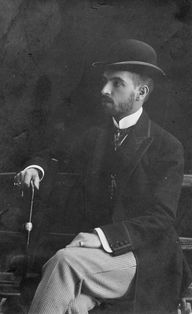
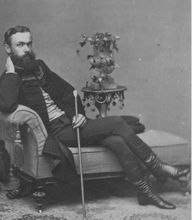
Q7 Who is shown in two photographs? Wikimedia Commons labels one “Nikolics II. Fedor” (about 1900) and the other “Báró rudnai Nikolics Milos”. The archive shows them with those labels; it has not verified whom they show.

Q8 Who wrote the family manuscript? Markov and Glăvan propose, as a working hypothesis, Aleksandar (Šandor) II Nikolić (1878–1926). The manuscript is neither signed nor dated.

Q9 Where did Fedor’s 1880 missions take him? The 1903 obituary, as relayed by Marcov (2011) and Markov and Glăvan (2021), says the “Baltic countries”; yet Milankov ties his 1880 diplomatic success to Romania. “Baltic” may be a slip for “Balkan” — the archive’s conjecture, not a statement in any source.

Q10 When did Fedor become a Hungarian baron? Marcov (2011) says the Hungarian baronial title was granted in 1875; Markov and Glăvan (2021), citing Milankov, date Fedor’s Hungarian barony to 10 February 1886. The two may concern different grants — the family’s in 1875, Fedor’s own in 1886 — but no source says so.

Images and credits

Every picture on the site, with its credit and licence. Pictures from Wikimedia Commons are used under the licence stated on their file page. Two pictures come from the collection of the National Museum of Banat and are reproduced with the museum’s permission. The small mark in the page header is a detail of Plate I.

Every picture on the site, with its credit and licence
PlateWhat it showsCreditLicence and link
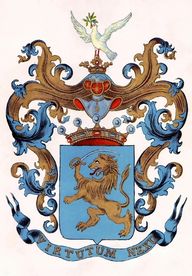
Plate IThe baronial arms of the Nikolić de Rudna family. The same artwork is Appendix 2 of Markov & Glăvan (2021), credited there to Lendvai (1905).Supplied by the family; the source of this copy is not recorded.Artwork from before 1920; reproduction rights unconfirmed
Plate IIThe first page of Geschichte unserer Familie (“History of our family”), the family manuscript: general remarks on the Serbs in Hungary, then the sources for the family’s history.National Museum of Banat, Timișoara, History Department, inv. 21.735. Reproduced from Markov & Glăvan 2021, Appendix 1.Museum holding, reproduced with permission
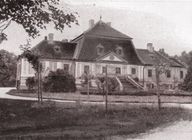
Plate IIIThe Nikolić manor at Rudna, as photographed for a book of 1913.Photograph published in Borovszky (1913), reproduced in Markov & Glăvan 2021, Appendix 5.Public domain by age
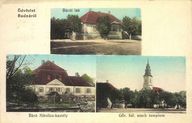
Plate IV“Greetings from Rudna”, an early twentieth-century postcard: the baron’s house, the Nikolics castle and the Serbian church.Postcard from the Hungaricana gallery, reproduced in Markov & Glăvan 2021, Appendix 6.Public domain by age
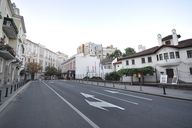
Plate VThe house of Baron Mihály Nikolics of Rudna on Piața Traian, Timișoara, photographed in 2020.Photograph by “Turbojet”, 2020. Wikimedia Commons, file “Timisoara, Casa Nikolici de Rudna.jpg”. CC BY-SA 4.0.CC BY-SA 4.0File page on Wikimedia Commons
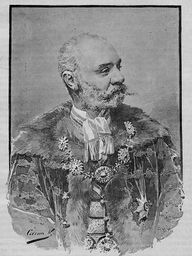
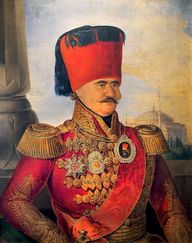
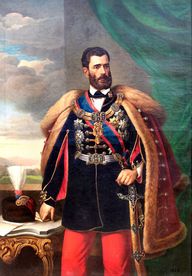
Plate VIBaron Fedor Nikolić in later life, in the dress of a Hungarian magnate. Engraving signed “Cserna K.”Károly Cserna. Wikimedia Commons, file “Fedor Nikolić.jpg”. Public domain.Public domainFile page on Wikimedia Commons
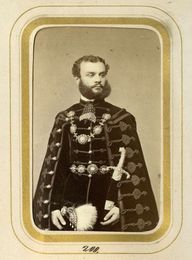
Plate VIIFedor Nikolić in 1865, in Hungarian court dress. Carte-de-visite by Borsos József.Borsos József, 1865. Wikimedia Commons, file “Nikolics Fedor.png”. Public domain.Public domainFile page on Wikimedia Commons
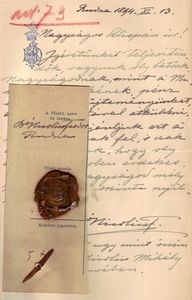
Plate VIIIThe letter of 13 November 1894 in which Fedor and Mihajlo Nikolić donate a coin collection to the Temesvár museum society.National Museum of Banat, Timișoara, historical archive. Reproduced from Markov & Glăvan 2021, Appendix 4.Museum holding, reproduced with permission
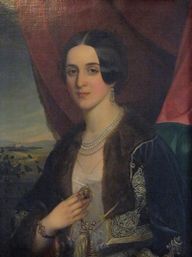
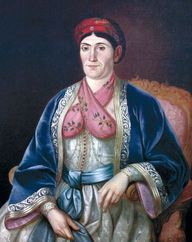
Plate IXJelisaveta “Savka” Obrenović (1814–1848), painted by Miklós Barabás in 1845. The painting is catalogued with the Residence of Princess Ljubica, Belgrade.Painting: Miklós Barabás, 1845. Photograph: “Gmihail” (Serbian Wikipedia). Wikimedia Commons, file “Miklos Barabas, Savka Obrenović, 1845, Princess Ljubica’s Residence.jpg”. CC BY-SA 3.0 RS.CC BY-SA 3.0 RSFile page on Wikimedia Commons
Plate XPrince Miloš Obrenović (1780–1860), Savka’s father and Fedor’s grandfather. Painting of about 1850 (the painter is given on Commons as Brandt).Painting, about 1850. Wikimedia Commons, file “Knez Miloš Obrenović.jpg”. Public domain.Public domainFile page on Wikimedia Commons
Plate XIPrincess Ljubica Obrenović, born Vukomanović (1788–1843), Savka’s mother and Fedor’s grandmother. Anonymous nineteenth-century portrait.Anonymous, nineteenth century. Wikimedia Commons, file “Knjeginja Ljubica.jpg”. Public domain.Public domainFile page on Wikimedia Commons
Plate XIIPrince Mihailo Obrenović (1823–1868), Savka’s brother and Fedor’s uncle. Painting by Stevan Todorović, inscribed 1875, after the prince’s death.Stevan Todorović, 1875. Wikimedia Commons, file “Portret Mihailo Obrenović.png”. Public domain.Public domainFile page on Wikimedia Commons
Plate XIIIThe Residence (Konak) of Princess Ljubica in Belgrade, built 1829–30, where Savka’s mother lived. Today part of the Belgrade City Museum.Photograph by Jorge Láscar, 2012. Wikimedia Commons, file “Residence of Princess Ljubica (Konak Kneginje Ljubice) (13807170653).jpg”. CC BY 2.0.CC BY 2.0File page on Wikimedia Commons
Plate XIVA photograph labelled “Nikolics II. Fedor”, about 1900 — probably Fedor II (born 1871). Identity as labelled on Wikimedia Commons; not verified.Unknown photographer. Wikimedia Commons, file “Nikolics II. Fedor.jpg”. Public domain.Public domainFile page on Wikimedia Commons
Plate XVA photograph labelled “Báró rudnai Nikolics Milos” — probably Miloš Nikolić (1833–1863), Fedor’s elder brother. Identity as labelled on Wikimedia Commons; not verified.Unknown photographer. Wikimedia Commons, file “Báró rudnai Nikolics Milos.jpg”. Public domain.Public domainFile page on Wikimedia Commons
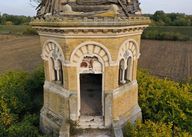
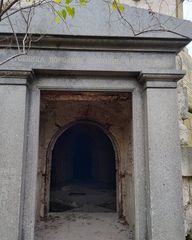
Plate XVIThe tomb of the Nikolić of Rudna family, seen from above.Family photograph, published with the family’s permission.Family collection
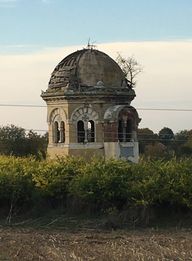
Plate XVIIThe tomb tower from the field. The dome has lost much of its boarding.Family photograph, published with the family’s permission.Family collection
Plate XVIIIThe entrance of the tomb. The inscription, partly cut off in the photograph, reads in Serbian Cyrillic “Tomb of the Nikolić of Rudna family”.Family photograph, published with the family’s permission.Family collection
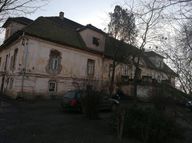
Plate XIXThe manor at Rudna, from the side. The number plate of the car has been blurred.Family photograph, published with the family’s permission.Family collection
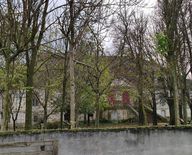
Plate XXThe manor at Rudna through the trees, with its stair.Family photograph, published with the family’s permission.Family collection
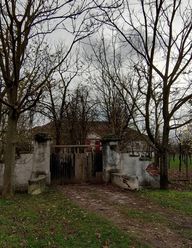
Plate XXIThe gate and wall in front of the manor.Family photograph, published with the family’s permission.Family collection
Plate XXIIRudna (“Rudno”, bottom right) on section 77 of the Josephinian Land Survey, 1769–72 — a dozen years before the family bought the estate.Österreichisches Staatsarchiv, Kriegsarchiv: Josephinische Landesaufnahme (First Military Survey), Banat, section 77, 1769–72. Wikimedia Commons, file “Banat Josephinische Landaufnahme pg077.jpg”. Public domain.Public domainFile page on Wikimedia Commons

About the archive

This archive was compiled by Vincent Nikolic de Rudna, a descendant of the family. He is registered in France as “Nikolic de Rudna”, without the accent of the Serbian ć; the Family page lists the other forms of the name.

This archive records only members of the family who are deceased and who appear in the published record. Later generations kept their genealogy private, and it is not recorded here.

The compiler holds civil records of his own descent, from himself back through his mother and her father. They name living people and are not published. The link from that line to the baron’s family rests, for now, on family tradition: the archive does not state it as a fact, and will document it when the records exist.

The two works on which the archive leans most — the 2021 paper by Markov and Glăvan and the 2011 article by Marcov — are not republished here. Each is cited with its DOI or its publication details, and a reader who wants the whole text should go to the original. The family manuscript is not republished either; the archive reads it in the Serbian translation printed in the 2021 paper.

How to cite

To cite a page of this archive, give “Nikolić de Rudna archive”, the title of the page and its reference code (for example “Baron Fedor, NR/FEDOR”), the language of the version you read and the date on which you read it.

To cite a fact, cite the source named in the margin beside it rather than this archive; the margin gives the page. Where the margin says “via”, cite the work through which the archive reached the source, and say so.

Contact and corrections

Readers who can add to the record, correct it or ask about the family are welcome to write to the archive at the address below, in French, English or Serbian.

contact [at] nikolicderudna.org (replace [at] with the at sign)

A correction is most useful when it names its source: the work, archive or document, with the page. The archive publishes only what rests on a source, so a statement without one is not added as a fact; it stays a question. A correction that holds up is made in the text, and where sources disagree both readings go into the register of discrepancies.

The archive does not publish information about living people without their consent, and it does not answer requests for the addresses or personal details of living people.

Messages are read by the compiler; a reply may take some time.