NR/FAMILY
The family
From three brothers named Nikola in 1694 to the barons of Rudna: names, estates, marriages and a timeline, every fact with its source.
The name
Serbian family names grow out of a baptismal name and the ending -ić (Hungarian -ics), which marks descent from the first bearer of the name: Nikolić means a descendant of Nikola, the Serbian form of Nicholas. The first letter of nobility, of 1694, names three brothers, Manojlo, Petar and Slavon Nikola. During the eighteenth century the forms Nikolić and “Nikola alias Nikolić” came into use, with the Latinised Nicolics; from 1783 only Nicolics is written, and with a c. The forms in use today are set out below.
| Form | Where and when | Sources |
|---|---|---|
| Николић од Рудне · Nikolić od Rudne | Serbian, in Cyrillic and in Latin script. | |
| Nikolics · Nicolics · rudnai Nikolics | Hungarian records and captions. Rudnai means “of Rudna”. The spelling with c is the only one used from 1783. |
|
| Nikolić de Rudna | The family’s historical form in Latin script, as used in international writing, including English Wikipedia. | |
| Nikolics de Rudna · Nicolics de Rudna | Romanian and genealogical writing. Marcov (2011) uses both spellings; the genealogy site euweb.cz titles its page “Nikolics de Rudna”. | |
| Nikolic de Rudna | The form registered in France today, written without the accent of the Serbian ć. |
Three brothers, 1694
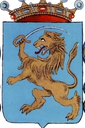
On 26 March 1694 King Leopold I gave Hungarian nobility with a coat of arms to the brothers Manojlo, Petar and Slavon Nikola, and to Manojlo’s wife Ana. The grant was an armales, a letter of ennoblement, and it was published the same year at the assembly of Pest County. The arms themselves have a page of their own.
The descendants of the three brothers lived in Pest, Buda, Ráckeve and Szentendre, and some reached Lugoj and Čakovo. The register of the nobles of Pest County keeps 29 notes on members of the family between 1694 and 1810, many of them made when a member asked the county for a certificate of nobility: a nobleman without land needed one to claim his rights, and to settle in another county. In 1811 Manojlo and Karitón Nikolić came to Čakovo and proved their kinship with old Jovan Nikolić of Rudna so that their nobility would be recognised; nothing more is known of them. The manuscript’s author does not know what became of the other Nikolić families, still many at the end of the eighteenth century. They remained simple armalists, nobles without a predicate, and the author suggests that, with nothing to set them apart, the awareness of belonging to a noble family faded with time.
Petar’s son Đorđe received the nickname Hadži, given to those who had been to the Holy Sepulchre in Jerusalem, a journey much harder then than now and one their descendants prized. The nobility papers of 1783 recall it. Đorđe’s son was Jovan, and Jovan’s son, also called Jovan, is the man who bought Rudna.
Jovan Nikolić and Rudna
Jovan Nikolić — in the documents of the time “Nikola alias Nikolić” — appears from 1772 in Osijek, in Slavonia, as a trader who was mainly active in the school system set up across the country under Empress Maria Theresa’s Ratio educationis publicae. Between 1772 and 1782 he also traded with “Persian wool” factories in Vienna and Linz, and founded such workshops in the country.
In 1782 the tax authorities of the counties of Temes and Torontál, set up after the final expulsion of the Turks, were selling many estates and domains in the Banat. Jovan Nikolić bought the Rudna estate together with his father-in-law, Todor Janković of Mirijevo, for 52,028 gulden and 22¾ kreuzer. One local article puts the purchase in 1781.
The manuscript says nothing more about Todor Janković. A local article of 2026 describes a “Teodor Iancovici de Mirievschi” as a senior imperial official who helped organise schooling in the Banat; no source says whether he is the same man.
Only nobles could own land, and the tax authority burdened the purchase because it did not accept Jovan’s proof of nobility. He therefore proved it through the processus productionalis provided for in the Libri Regii, the royal registers; the manuscript’s author says he read all the original documents of that procedure. As a result Emperor Joseph II confirmed Jovan’s old nobility on 18 April 1783, by act no. 3400/1783.
Jovan later paid his partner Janković out and became the sole owner of Rudna. In 1792 he took part, as a delegate, in the Diet at Pressburg (today Bratislava), where Francis was crowned, and was made a Knight of the Golden Spur, an old Hungarian honour given only during a coronation. He also held the court title Aulae Regiae Familiaris, which the manuscript equates with court stolnik, and was counsellor to the appeal courts of the counties of Torontál, Temes and Syrmia — in those days not an official post but a nobles’ office for aristocrats well versed in law. Between 1788 and 1801 he gave large sums of money, produce and grain for the wars against the Turks (1788 and 1789) and the French (1794, 1796, 1800 and 1801).
In 1787, already the owner of Rudna, he was put at the head of the administration of the Serbian schools in Osijek; in 1810 he became co-administrator of the Serbian National Fund.
An adopted son
Jovan Nikolić had no children. He adopted a young man, Jovan Belčić, born in Zemun in 1776: his father was a burgher of Zemun, and his mother, Marta, was born in Irig, in Slavonia, in 1747. The manuscript calls this adopted son the ancestor of the whole family.
We are not descendants of old Nikolić; we are actually Belčić.
At the old man’s request King Francis I approved, on 14 August 1804 and by act no. 8113/1804, the donation of the Rudna estate “from our faithful Jovan Nikolić, counsellor of the appeal courts, Knight of the Golden Spur, court stolnik, to his adopted son Jovan Belčić, who shall henceforth bear the name Nikolić”. The act approved the adoption, the transfer of nobility and arms, and the giving up of the name Belčić, which Jovan had borne until then.
Jovan Belčić’s family
Jovan Belčić, a Nikolić from 1804, became the owner of Rudna; the manuscript calls him the ancestor of most noble families of the Banat. His first wife was Jelisaveta, daughter of Anastas and Marija Karamat of Zemun. They had a son, Jovan (VII), and three daughters: Marija married Jovan Atanasijević of Valeapaj, Jelisaveta married Baron Stefan Duka of Kadar, and Sofija married Konstantin Manasije of Hodon. His second wife was Alojzija, daughter of Petar Tekelija of Kevermes and Katarina Szaplonczay of Tivadar; they had two sons, Petar and Šandor. In 1825 he bought the Macedonia estate from the Jovanović-Vidak family. He died in 1828; Lendvai’s pedigree gives 1830.
By his will of 1828, Jovan (VII) received Macedonia, and Petar and Šandor received Rudna. Rudna then counted 5,780 jutros with 48½ peasant holdings, called “sessions”, and Macedonia 2,000 jutros with 62½. To balance the shares, Jovan was given a further 600 jutros of Rudna land. A jutro, or hold, is about 0.58 hectares, so Rudna was about 3,300 hectares and Macedonia about 1,150 (conversion by the archive).
Baron Jovan and the Obrenović marriage
On 16 October 1831 Jovan (VII) married Jelisaveta “Savka” Obrenović, daughter of Prince Miloš Obrenović of Serbia. The marriage tied the family to the princely house; its story has a page of its own.
They had five sons. Milan and Mladen died in childhood, in 1840 and 1849, and Miloš as an adult, in 1863. Fedor was for five years Civil Adlatus of Bosnia — the manuscript calls the post “Civil Governor” — and a Privy Councillor. Mihajlo, the manuscript adds, was the father — by adoption — of the man to whom it is addressed.
In 1854 an Austrian barony was conferred on Jovan (VII) and extended to his sons Miloš, Fedor and Mihajlo. The sources give two different days for the grant: 18 November and 22 April.
Jovan (VII) died at Rudna on 10 May 1880.
The last generations of the record
Petar, Jovan (VII)’s half-brother, sold his share of Rudna in 1875 to his nephew — Fedor, according to a local newspaper — and withdrew to Žitište, where he died in 1878. His son Ivan died without children.
Šandor, the other half-brother, sold his share of Rudna in 1873. He then sat several times in parliament, was a župan — head of a county — for ten years, and died in 1897 according to the manuscript, in 1893 according to Lendvai’s pedigree.
Fedor, the second son of Jovan (VII), died at Rudna on 27 February 1903, after a long illness. About 4,000 mourners came to his funeral on 4 March, and he was laid in the family chapel on the estate. His will named his son Fedor II universal heir. The page on Baron Fedor tells his life.
Mihajlo (1841–1916), the last member of the family covered by the manuscript, adopted Jovan Thierfelder, the man to whom it is addressed. With the royal consent of 1905 Thierfelder became an Austrian baron, with the predicate “of Obrenov”.
Local press reports that in 1919 the baron’s son sold the Rudna manor and settled in France. Fedor II had been named universal heir in 1903, which makes him the likely seller; no source says so. The story of the family told here ends with that year.
Kindred named in the manuscript
At the end of its fourth section the manuscript lists the names borne now or formerly by people whose common ancestor is Jovan Nikolić, and who are, it concludes, the reader’s blood relatives: Nikolić of Rudna; Baron Nikolić of Rudna; Baron Nikolić of Obrenov; Graf Hardegg; Wich von der Reuth; Atanasijević of Valeapaj; Bajić of Varadija; Baron Bajić of Varadija; Baron Trautenberg; Baron Tallián von Vizek; Weszely; Baron Duka; Pattyanszky von Viszág; Rónay von Kis-Zombor; Čarnojević of Mača and Mali Orosin (today Rusko Selo, Kikinda, North Banat District); Manaszy von Hodony; Baron Manasije-Barko; Niamessny von Almánfalva; Tömöry. The author also prepared a second table for the Obrenović family and all its descendants, to show the reader’s degree of kinship with the former royal line, and the double kinship with the Bajić family.
Timeline
Every dated event used in this archive, in order. The marker shows the kind of event; a mark in the margin shows where the sources differ, or where a statement rests on a single report.
- Context
Great Migration of Serbs under Patriarch Arsenije III Čarnojević. King Leopold I grants them privileges in Bačka, the Banat and the regions of Szeged and Arad.
- Rank
King Leopold I grants Hungarian nobility with a coat of arms — an armales — to the brothers Manojlo, Petar and Slavon Nikola and to Manojlo’s wife Ana. It is published the same year at the Pest County assembly. The author of the family manuscript never saw the letters patent; he knew its content from indirect sources.
- Office
Jovan Nikolić — recorded as “Nikola alias Nikolić” — is documented in Osijek, Slavonia, as a trader and an organiser of the school system set up under Maria Theresa’s Ratio educationis. From 1772 to 1782 he also trades with “Persian wool” factories in Vienna and Linz.
- Estate
Jovan Nikolić and his father-in-law Todor Janković of Mirijevo buy the Rudna estate from the tax authority, which was selling Banat estates after the expulsion of the Turks, for 52,028 gulden 22¾ kreuzer.
- Rank
Emperor Joseph II confirms Jovan Nikolić’s old nobility (act no. 3400/1783) after a formal proof of nobility, the processus productionalis of the Libri Regii; only nobles could own estates. The 1783 papers recall that Đorđe, Petar’s son, bore the nickname “Hadži” — a pilgrim to the Holy Sepulchre. From this year the name is written only “Nicolics”, with a c.
- Office
Jovan Nikolić, by then owner of Rudna, is placed at the head of the administration of the Serbian schools in Osijek.
- Rank
Jovan Nikolić attends the Diet at Pressburg (Bratislava) as a delegate at the coronation of Francis, and is made a Knight of the Golden Spur, an honour given only at coronations. He also bears the court title Aulae Regiae Familiaris and is counsellor to the appeal courts of the Torontál, Temes and Syrmia counties. Between 1788 and 1801 he gives large sums and supplies for the wars against the Turks and the French.
- Rank
Having no children, Jovan Nikolić had adopted Jovan Belčić, born in Zemun in 1776. King Francis I approves (act no. 8113/1804) the donation of the Rudna estate to the adopted son, “who shall henceforth bear the name Nikolić”: the adoption, the transfer of nobility and arms, and the abandonment of the name Belčić.
- Office
Jovan Nikolić becomes co-administrator of the Serbian National Fund.
- Birth
Birth of Jovan (VII), son of Jovan Belčić and his first wife, Jelisaveta Karamat.
- Estate
Jovan Nikolić (formerly Belčić) buys the Macedonia estate — today a village in the town of Ciacova — from the Jovanović-Vidak family.
- Death
Death of Jovan Nikolić (formerly Belčić); 1830 in Lendvai’s pedigree. By his will of 1828, Jovan (VII) receives Macedonia and his half-brothers Petar and Šandor receive Rudna; to balance the shares Jovan is given 600 more jutros of Rudna land. Rudna then counts 5,780 jutros with 48½ peasant holdings, Macedonia 2,000 jutros with 62½.
- Marriage
Jovan Nikolić (VII) marries Jelisaveta “Savka” Obrenović, daughter of Prince Miloš Obrenović of Serbia.
- Estate
The Serbian Orthodox church of the Holy Archangels Michael and Gabriel is built at Rudna, linked in local accounts to the Nikolić family.
- Birth
Fedor is born in Temesvár, the second son of Jovan (VII) and Savka.
- Records
During the Revolution a fire at the family house near Rudna destroys the family’s papers from before 1848.
- Death
Death of Savka Obrenović, when Fedor is twelve.
- Rank
An Austrian barony is conferred on Jovan (VII) and extended to his sons Miloš, Fedor and Mihajlo. The sources give two different days: 18 November and 22 April.
- Office
Fedor graduates in law at the University of Graz.
- Office
Fedor is elected to the Hungarian Diet for the district of Párdány (Međa), on a programme of Deák’s party; from 1865 he sits for Zsombolya (Jimbolia) and resigns that mandate in 1867.
- Office
Fedor passes the bar examination and practises under the Temesvár lawyer von Sulnok.
- Office
Fedor travels in western Europe to study administration, economies and institutions; his longest stays are in London and Brussels.
- Death
Prince Mihailo Obrenović, Fedor’s uncle, is assassinated in Belgrade. Fedor and his father, Baron Jovan, arrive there on 12 June.
- Marriage
Fedor marries the opera singer Wilhelmina Hirsch, born in Lemberg on 27 June 1848. The year is disputed: a genealogical table gives 1869, in Vienna; the 1903 obituary, repeated in later articles, gives 1879.
- Estate
Šandor, Jovan (VII)’s half-brother, sells his share of Rudna.
- Estate
After the Bucharest agreement of 8 June, Prince Mihailo’s property in Romania is divided among his heirs — Fedor, Mihajlo and the Bajić barons, who had settled with the prince’s widow, Countess Júlia Hunyady de Kéthely (called “Princess Arenberg” in the 1903 obituary, after her marriage in 1876 to Duke Karl of Arenberg). Fedor receives the estates of Mavrodin and Buzescu (Teleorman County), Tămădea-Tămășești (Ilfov County) and a quarter of Andrășești.
- Rank
A Hungarian baronial title is granted this year, according to one article; other sources date Fedor’s Hungarian barony to 10 February 1886.
- Estate
Petar sells his share of Rudna to his nephew — Fedor, according to a local newspaper — and withdraws to Žitište, where he dies in 1878.
- Office
Fedor is elected to the executive committee of the Serbian National Theatre in Novi Sad.
- Office
Fedor returns to politics and the Foreign Ministry gives him “several important missions”: in the “Baltic countries”, says the 1903 obituary; yet Matica srpska honours him this year for a diplomatic mission in Romania. On 18 September he becomes a member of Matica srpska.
- Death
Death of Jovan (VII) at Rudna.
- Office
Fedor is appointed Civil Adlatus of Bosnia and Herzegovina, with the rank of Privy Councillor, on the choice of Common Finance Minister Béni Kállay. He arrives in Sarajevo on 1 August 1882 and holds the post until November 1886.
- Estate
In Sarajevo the former Austro-Hungarian consulate, a Turkish-style building, is adapted and becomes the “Nicolics house”, the meeting place of the city’s high society; its soirées also welcome native notables, since Fedor is related to the Serbian royal family.
- Rank
In Belgrade King Milan I Obrenović confers the Grand Cross of the Order of Takovo on Fedor; the occasion confirms the good relations between the Obrenović dynasty and Austria-Hungary.
- Birth
Micheline is born in Sarajevo.
- Rank
Fedor receives the Order of the Iron Crown, first class.
- Office
Fedor sits in the House of Representatives for Nagykikinda (Kikinda) as a Liberal, over three mandates; in his last years he no longer stands and attends the House of Magnates only on important business.
- Rank
Fedor receives the Hungarian baronial title — 10 February — and in 1886 becomes a member of the House of Magnates, which he remains until his death. He leaves Bosnia in November, with a letter of thanks from the Emperor; Sarajevo and other Bosnian towns make him an honorary citizen.
- Office
Fedor is appointed Royal Commissioner to the Serbian Orthodox Church-National Congress, a post he holds until 1901 (1902 in one account). He is present on 6 May 1890 when the foundation stone of the gymnasium and seminary at Sremski Karlovci is laid, and his signature is among those in the letter placed in the foundation. In the autumn he co-founds a credit bank at Novi Sad with Patriarch Georgije Branković and Lazar Dunđerski.
- Office
Offered the parliamentary seat of his native Timișoara, Fedor declines — the second time saying he no longer wishes to be a deputy.
- Records
Fedor and Mihajlo donate a numismatic collection — 29 gold, 297 silver and about 190 bronze coins — to the historical and archaeological museum society of Temesvár, now the National Museum of Banat; the donation is recorded on 22 December.
- Death
Fedor dies at about 8:30 in the evening in the Rudna castle, surrounded by his family, after a long illness — heart trouble, asthma and rheumatism since early 1902.
- Death
Funeral at 11 a.m. with about 4,000 mourners, led by Bishop Lukijan Bogdanović with 12 priests and three senior clergy. The metal coffin, carried on 3 March to the Serbian church draped in black, is placed in the family chapel on the Rudna estate. The will names Fedor II universal heir.
- Rank
Royal consent to Baron Mihajlo’s adoption of Jovan Thierfelder, who becomes an Austrian baron with the predicate “of Obrenov”.
- Death
Death of Mihajlo (IV), the last family member covered by the family manuscript.
- Context
Austria abolishes its nobility, with its privileges, titles and noble names (the Adelsaufhebungsgesetz). The family’s barony of 1854 was an Austrian one. The family tells that this law is why the baron’s son left; no published source says so.
- Estate
Local press reports that the baron’s son sold the Rudna manor and settled in France. Fedor II had been named universal heir in 1903, which makes him the likely seller; no source says so.
- Estate
A lawyer, Dr. Alexandru Lighezan, owns the Rudna manor until 1946. Afterwards it serves as a promenade house and a border-guard post, and in the 1960s as the headquarters of a collective farm; it decays after 1989.
- Records
The manuscript Geschichte unserer Familie is registered in the National Museum of Banat in Timișoara, in two copies — handwritten (inv. 21.735) and typed (inv. 21.734).
- Estate
A German couple buy the Rudna manor and begin to restore it. It is a listed historic monument and remains privately owned.
- Records
Markov and Glăvan publish the Serbian translation of the family manuscript, with commentary, in the journal Ishodišta.
Lineage charts
The manuscript was written with three genealogical tables, drawn as trees and read from the bottom up. Table A covers the descendants of the three brothers ennobled in 1694, from the end of the seventeenth century to the beginning of the nineteenth, in five generations. Table B covers all the descendants of Jovan Belčić, from the end of the eighteenth century to the author’s day, in six generations. Table C covers the Obrenović family and its descendants, in seven generations. Families linked by marriage are marked in red, and rises in noble rank and other important facts in blue. The three tables are not in the museum’s file. This archive redraws parts of Tables A and B, reading from left to right, from Lendvai’s pedigree, the manuscript’s text and the other sources, with the same colours; the Obrenović table is drawn on its own page.
Table A: from Nikola I to Jovan Belčić
The line from Nikola I, through the three brothers ennobled in 1694, to Jovan Nikolić of Rudna, who adopted Jovan Belčić in 1804. Redrawn by this archive from Lendvai’s pedigree and the family manuscript. Only Petar’s line is followed; the descendants of Manojlo and Slavon are not drawn.
Swipe sideways to follow the whole chart.
- Descent
- Marriage
- Adoption
- Rise in rank (year)
- Estate (year)
- * born · † died
- Lendvai 1905, p. 141 via Markov & Glăvan 2021
- Markov & Glăvan 2021, pp. 150, 162
The same chart as a list
- Nikola I. Named as father of the three brothers in Lendvai’s pedigree only.
- Children:
- Manojlo I (Emanuel) — Rank 1694 (Nobility and arms).
- Married to: Ana. Wife of Manojlo; ennobled with him in 1694.
- Petar I — Rank 1694 (Nobility and arms).
- Children:
- Đorđe “Hadži”.
- Children:
- Jovan II.
- Children:
- Jovan the elder (active 1772–1810) — Estate 1782 (Rudna); Rank 1783 (Nobility confirmed).
- Married to: Marija Janković.
- Adoption:
- Jovan Belčić (1776–1828) — Rank 1804 (Nobility, arms and the name Nikolić).
- Jovan the elder (active 1772–1810) — Estate 1782 (Rudna); Rank 1783 (Nobility confirmed).
- Children:
- Jovan II.
- Children:
- Đorđe “Hadži”.
- Children:
- Slavon — Rank 1694 (Nobility and arms).
- Manojlo I (Emanuel) — Rank 1694 (Nobility and arms).
- Children:
Table B1: Jovan Belčić and his children
Jovan Belčić, a Nikolić from 1804, with his two wives and the children the manuscript and Lendvai give them. Jovan (VII), his son by the first marriage, carries on in Table B2.
Swipe sideways to follow the whole chart.
- Descent
- Marriage
- Adoption
- Rise in rank (year)
- Estate (year)
- * born · † died
- Markov & Glăvan 2021, pp. 152–153
- Lendvai 1905, p. 141 via Markov & Glăvan 2021
The same chart as a list
- Jovan Belčić (1776–1828) — Estate 1825 (Macedonia).
- Married to (first marriage): Jelisaveta Karamat. First wife; daughter of Anastas and Marija Karamat of Zemun. Children:
- Jovan (VII) (1810–1880) — Rank 1854 (Austrian barony). → B2
- Married to: Savka (1814–1848).
- Three daughters: Marija, Jelisaveta † 1895, Sofija. Marija married Jovan Atanasijević of Valeapaj; Jelisaveta married Baron Stefan Duka of Kadar; Sofija married Konstantin Manasije of Hodon.
- Jovan (VII) (1810–1880) — Rank 1854 (Austrian barony). → B2
- Married to (second marriage): Alojzija Tekelija. Second wife; daughter of Petar Tekelija of Kevermes and Katarina Szaplonczay of Tivadar. Children:
- Married to (first marriage): Jelisaveta Karamat. First wife; daughter of Anastas and Marija Karamat of Zemun. Children:
Table B2: Jovan (VII), Savka and their descendants
The five sons of Jovan (VII) and Savka Obrenović, and the children of Fedor and Mihajlo. The Austrian barony of 1854 was extended to the sons; Fedor’s Hungarian barony is dated 1875 or 1886 (register row C8). No one born after 1882 is drawn.
Swipe sideways to follow the whole chart.
- Descent
- Marriage
- Adoption
- Rise in rank (year)
- Estate (year)
- * born · † died
- Markov & Glăvan 2021, p. 153
- Marcov 2011, p. 11
- euweb.cz genealogy
- Lendvai 1905, p. 141 via Markov & Glăvan 2021
The same chart as a list
- Jovan (VII) (1810–1880) — Rank 1854 (Austrian barony). ← B1
- Married to: Savka (1814–1848). Children:
- Miloš Nikolić (1833–1863) — Rank 1854 (Austrian barony).
- Fedor (1836–1903) — Rank 1854 (Austrian barony); Rank 1875/86 (Hungarian barony).
- Married to: Wilhelmina (* 1848). Children:
- Milan († 1840). Died in childhood.
- Mihajlo (1841–1916) — Rank 1854 (Austrian barony).
- Married to: Marianne Kinsky (1854–1938). (div. 1880)
- Adoption:
- Jovan Thierfelder — Rank 1905 (Austrian barony, “of Obrenov”).
- Mladen († 1849). Died in childhood.
- Married to: Savka (1814–1848). Children:
What this archive leaves out
This archive records only members of the family who are deceased and who appear in the published record. Later generations kept their genealogy private, and it is not recorded here. The family’s story is told to 1919.